

In a world drowning in
throwaway culture, vintage
isn't just a style—it's a
statement.

At Another's Legacy, we believe the future of fashion lies in honoring the past. This is more than secondhand. It's a stand against overproduction, overconsumption and fashion waste.

-Another's Legacy
By buying preloved on<br><strong>Another’s Legacy</strong>, you can<br><strong>reduce your impact by 10x</strong>

By buying preloved on
Another’s Legacy, you can
reduce your impact by 10x

Buying First Hand
Buying Preloved On Another’s Legacy
Waste
90%
GHGs
Land
Use
Water
Composition
Water
Pollution
Air
Pollution

Fast Fashion, Fleeting Value

Fast fashion doesn’t last—its short-lived nature means it’s worn less and discarded faster.

At Another’s Legacy, our jewelry lives many lives. Our community treasures vintage and pre-loved pieces far longer than fast fashion ever allows.

While the average fast fashion item is quickly discarded, our timeless jewelry is worn again and again—often for decades, not just seasons. From solid gold rings to heirloom chains, each piece is more than an accessory—it’s a story that continues to evolve.

Built to last. Chosen with care. Worn with meaning.

Fast fashion
Another’s Legacy
Worn occasionally, often discarded within months
Worn for years, passed down or kept forever
Vintage rings are cherished long beyond trends at Another’s Legacy
Worn ~30x on average
Worn 80+ times
Vintage necklaces are worn over 2.5x more often at Another’s Legacy
Worn for a season
Worn year-round, often for decades
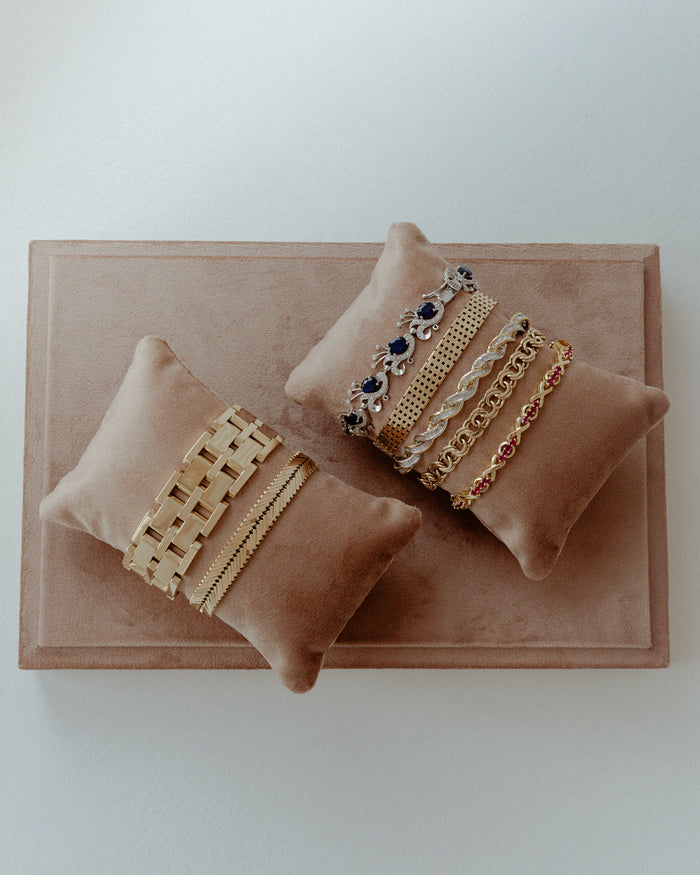
Vintage bracelets have timeless appeal and daily wearability
Worn 20–30x before losing value or breaking
Worn 70+ times, often part of a personal collection
Vintage earrings last and are restyled again and again
Prone to tarnishing or breakage within a year
Solid gold chains worn for life
Vintage chains are not just worn more, they’re worn forever

Another’s Legacy: A Circular Jewelry Model

Fast fashion jewelry is often made to break. Ours is made to last—and be loved again.
Manufactured
  • The production of fast fashion jewelry has skyrocketed in the last two decades.
  • Cheap materials like brass, plastic, and gold-plated alloys dominate the market.
  • Most fast jewelry is designed to be trendy — but not durable—leading to rapid waste.
  • The jewelry industry contributes heavily to metal waste and unethical mining practices.
Sold In Retail
  • Millions of low-cost jewelry items are sold annually—often in bulk and with no transparency on sourcing.
  • These pieces typically tarnish, break, or fall out of fashion within months.
  • Many are discarded after a few wears, contributing to the growing problem of fashion-related landfill waste.
Disposed
  • Most fast fashion jewelry ends up in landfill or e-waste bins within a year of purchase.
  • Items made with mixed or coated metals are often non-recyclable.
  • A large portion of discarded jewelry ends up in global waste exports, especially in developing nations.

Our Avoided Impacts Per Jewelry Category

CO₂ emissions consumers avoid by choosing vintage jewelry from Another’s Legacy instead of fast fashion jewelry.

Rings

Rings
72kg
CO₂ avoided
Like driving 480 km by car

Necklaces

Necklaces
126kg
CO₂ avoided
Equivalent to 1.5 short-haul flights

Bracelet

Bracelet
108kg
CO₂ avoided
Same as producing 4 pairs of jeans

Earrings

Earrings
72kg
CO₂ avoided
Same CO₂ as manufacturing a new smartphone

Pendant

Pendant
54kg
CO₂ avoided
Equal to burning 180 paraffin candles